The Complete Guide to Pallet Types and What They Are Used For
Walk into any warehouse, factory, or loading bay and you will find pallets. They are one of those things most people never think about, but they keep supply chains running across every industry. Not all pallets are the same, though. The type of pallet you use can affect how safely your goods travel, how efficiently your warehouse operates, and even whether your shipment clears customs.
This guide covers the main pallet types you are likely to come across in Zimbabwe and beyond. If you are not sure which type fits your needs, this is a good place to start.
Standard Wooden Pallets
The standard wooden pallet is by far the most common type in use. It is simple, affordable, and strong enough for most general warehousing, transport, and storage applications.
Standard pallets come in a range of sizes, but the most widely used dimensions in southern Africa tend to follow the patterns set by the industries that use them. Manufacturing, retail, and logistics all have their preferred sizes, and a reliable supplier will stock the ones your industry uses most.
Wooden pallets are popular because they are easy to repair, relatively cheap to produce, and can be reused many times before they wear out. When they do reach the end of their life, the timber can often be recycled or used for other purposes.
One thing to keep in mind: standard wooden pallets are not treated for export. If you need to ship goods internationally, you will likely need a heat-treated or ISPM 15 compliant pallet instead.
Heat-Treated Pallets
Heat-treated pallets have been through a controlled heating process that kills pests and organisms living in the wood. This is a requirement under ISPM 15, the international standard that governs wooden packaging materials used in cross-border trade.
If your business exports goods, you will almost certainly need heat-treated pallets. Without the correct treatment and the ISPM 15 stamp, your shipment can be rejected at the border or held in quarantine, which means delays and added costs.
Heat treatment does not change the appearance or strength of the pallet. It simply makes the wood safe for international shipping. The treated pallet is stamped with a mark that customs officials recognise, confirming it meets the standard.
In Zimbabwe, agriculture and tobacco are two sectors where heat-treated pallets are used extensively. Any produce or product leaving the country by land, sea, or air typically needs to sit on treated timber.
Heavy-Duty Pallets
Standard pallets work well for normal loads, but some goods are heavier than average. Mining equipment, industrial machinery, building materials, and large agricultural inputs can exceed the weight limits of a regular pallet.
Heavy-duty pallets are built with thicker boards, closer spacing, and stronger joinery. They are designed to carry loads that would crack or buckle a standard pallet. The trade-off is that they cost more and weigh more, but for the applications that need them, there is no substitute.
If your warehouse forklifts are regularly handling loads above the capacity of standard pallets, or if you have experienced pallet failures during transport, it is worth switching to heavy-duty stock for those particular loads.
Reconditioned Pallets
A reconditioned pallet is a used pallet that has been repaired and brought back to a functional standard. Broken boards are replaced, loose nails are driven home or swapped out, and the pallet is inspected before it goes back into circulation.
Reconditioned pallets are a cost-effective choice for businesses that do not need brand-new stock. They work well for internal warehousing, local transport, and any application where the pallet does not need to meet export standards.
The quality of reconditioning varies from supplier to supplier, so it matters who you buy from. A good supplier will only put a reconditioned pallet back on the market if it is genuinely fit for purpose. At PHC in Bulawayo, we inspect every reconditioned pallet before it leaves our yard.
Block Pallets vs Stringer Pallets
This is a structural distinction that affects how pallets are handled by forklifts and pallet jacks.
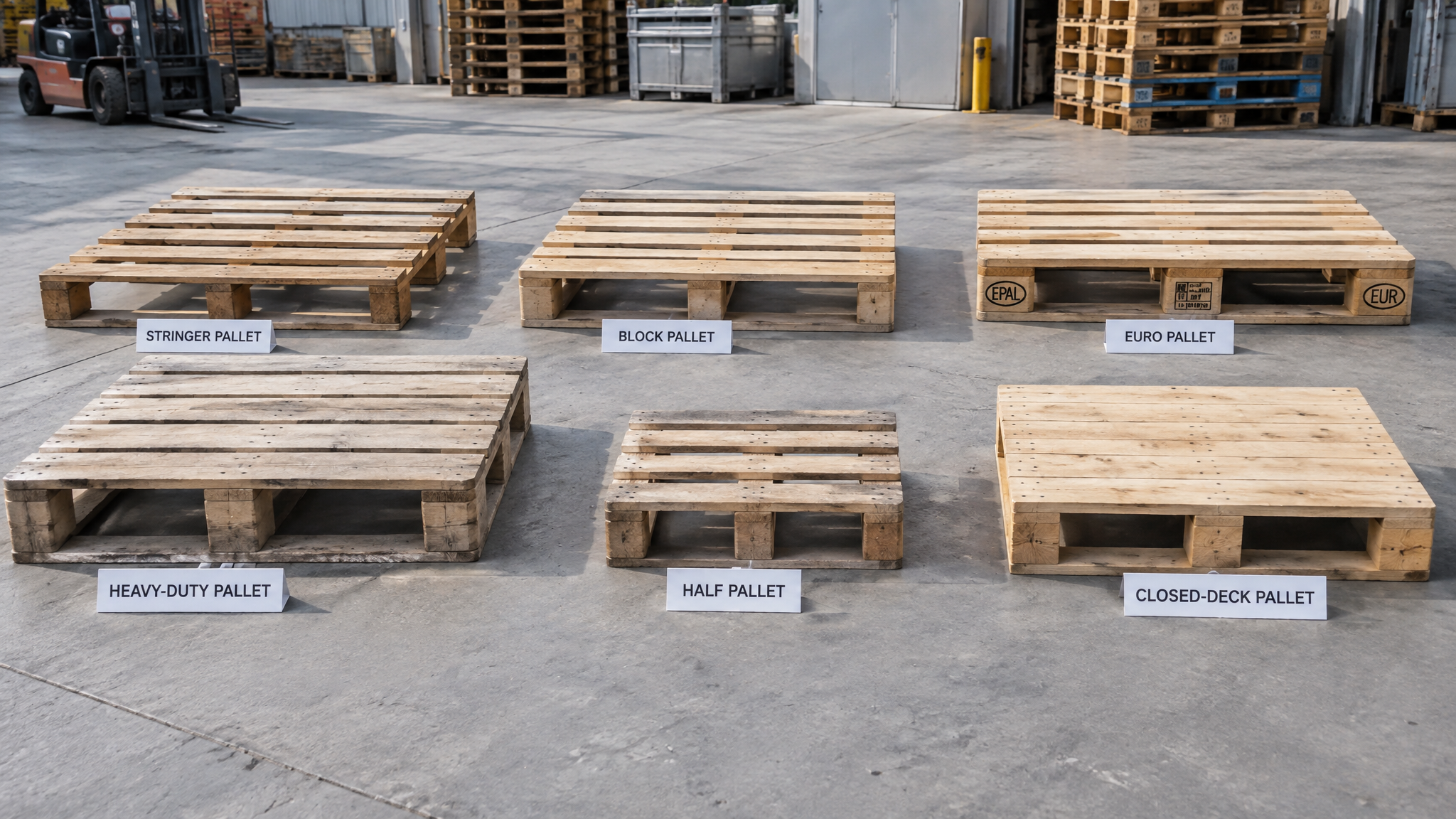
Stringer pallets use two or three long boards (stringers) running along the length of the pallet, with deck boards nailed across the top. A forklift can access them from two sides (the ends) but not from the stringer sides without notching.
Block pallets use blocks of wood at the corners and centre points, with deck boards on top and often on the bottom as well. This construction allows four-way forklift entry, which makes them more versatile in warehouses where space is tight and pallets need to be accessed from any direction.
In Zimbabwe, both types are in use. The choice often depends on your forklift setup and how your racking system is configured. If your warehouse needs four-way access, block pallets are the better option. If two-way entry is fine, stringer pallets are usually cheaper.
Plastic Pallets
Plastic pallets are less common in Zimbabwe than wooden ones, but they have their place. They are lighter, easier to clean, and immune to moisture damage, rot, and pests. This makes them popular in food processing, pharmaceuticals, and any environment where hygiene is a priority.
The downside is cost. Plastic pallets are significantly more expensive than wooden ones, and they cannot be repaired the same way. If a wooden pallet breaks a board, you replace the board. If a plastic pallet cracks, it is usually done.
For most general warehousing and logistics operations in Bulawayo and the surrounding area, wooden pallets remain the practical and affordable choice. Plastic pallets make sense in specific, hygiene-sensitive applications.
Display Pallets
Display pallets are designed for retail environments where pallets are visible to customers. Instead of the rough finish of a warehouse pallet, display pallets are sanded, sometimes painted or branded, and built to look presentable on a shop floor.
They are commonly used in supermarkets, hardware stores, and trade shows where products are stacked on pallets as part of the display. If you need display pallets, they are typically built to order as a bespoke product.
Choosing the Right Pallet for Your Business
The right pallet depends on three things: what you are putting on it, where it is going, and how much you want to spend.
- For general storage and local transport: standard wooden pallets are hard to beat on cost and availability.
- For export: heat-treated pallets are non-negotiable. Do not risk a shipment being turned back.
- For heavy loads: heavy-duty pallets save you from breakages and the safety risks that come with overloaded standard pallets.
- For tight budgets: reconditioned pallets give you reliable stock at a lower price point.
- For hygiene-sensitive environments: consider plastic pallets if your industry demands them.
- For retail display: bespoke display pallets keep your shop floor looking professional.
Where to Get Pallets in Bulawayo
If you are based in Bulawayo or anywhere in Zimbabwe's southern region, PHC Pallet Hire and Sales can supply the pallet type you need. We carry standard wooden pallets, treated pallets, heavy-duty stock, and reconditioned options. For anything non-standard, our bespoke pallet service builds to your exact specifications.
We also offer pallet hire if you do not need to buy outright, and repair and recycling services to keep your existing stock in good shape.
Not sure which type you need? Call or WhatsApp us and we will talk you through the options. No pressure, no jargon, just practical advice.
Need Pallets in Bulawayo?
PHC offers hire, sales, bespoke builds, and repair services. Get a free quote today.
Get a Free Quote